Is iPhone 16 Worth It
Is the iPhone 16 Worth It in 2026? A Long-Term Verdict
When the iPhone 16 first arrived, it was heralded as the first iPhone "built from the ground up for AI." It introduced the Camera Control button, the Action Button (finally) to the base models, and a vertically aligned camera for spatial video.
But in 2026, the novelty of a new button has worn off. We now judge the iPhone 16 by its bones how well it handles iOS 26, how the battery is holding up after 400+ charge cycles, and how it compares to the newer, 120Hz-equipped iPhone 17.
1. The Performance: Still a Powerhouse
The A18 chip inside the iPhone 16 was a massive leap over the A16 found in the previous year's base model. In early 2026, this chip will remain remarkably relevant. While the newer A19 in the iPhone 17 is technically 15–20% faster, the A18 still blazes through daily tasks.
- Gaming: In 2026, "AAA" mobile gaming is more common. The iPhone 16 handles titles like Resident Evil and Death Stranding with impressive stability.
- Multitasking: With 8GB of RAM as the standard, the iPhone 16 hasn't hit the RAM wall yet. Apps stay open in the background, and there's very little stuttering when jumping between resource-heavy AI tools.
If you are worried about speed, don't be. The iPhone 16 is still "overpowered" for 95% of users.
2. Apple Intelligence: Promises vs. Reality
The biggest selling point of the 16 was Apple Intelligence. By January 2026, we’ve seen the full rollout of features like Siri 2.0, Genmoji, and the Clean Up tool in Photos.
The Reality Check: While Apple Intelligence is helpful, it hasn't fundamentally changed how most people use their phones. The "Writing Tools" are great for proofreading an email, and the AI-summarized notifications help clear clutter, but the iPhone 16 isn't a "magic wand."
However, because the iPhone 16 has the 8GB of RAM required for on-device AI, it is future-proof. Unlike the iPhone 15 (base model) or the iPhone 14 Pro, which were cut off from the most advanced AI features, the iPhone 16 is still very much in Apple's "inner circle" of supported devices.
3. The Display: The One Great Regret
This is where the iPhone 16 starts to show its age in 2026. The 6.1-inch OLED screen is beautiful, color-accurate, and can drop to 1 nit of brightness (perfect for late-night scrolling).
But it is still 60Hz.
In 2026, even budget Android phones and the newer iPhone 17 have 120Hz high-refresh-rate displays. If you’ve ever used a Pro model or a newer 17, going back to the 60Hz screen of the iPhone 16 feels "slow." It’s not actually slow, but the animations look choppy by modern standards. If you are sensitive to screen motion, this might be the biggest reason not to buy a 16 today.
4. Camera Control: A Year of Use
The Camera Control button was the "big new thing" for the 16 series. After a year of real-world use:
- The Pro View: Photography enthusiasts love the ability to slide their finger to adjust exposure or zoom.
- The Casual View: Most users actually forget it’s there. Many people found that they accidentally triggered the button while taking the phone out of their pockets, leading to a lot of accidental photos of the inside of their jeans.
The camera itself, a 48MP Fusion lens remains excellent. It produces "optical-quality" 2x zoom shots that are indistinguishable from a dedicated telephoto lens in good lighting.
5. Battery Life and Long-term Health
One year later, the battery reports for the iPhone 16 are generally positive. The A18 chip’s efficiency has kept most users in the "all-day" range.
- New (2024) 7-8 Hours, After 1 Year (2026) 6-7 Hours
- Battery Health 100%, After 1 Year (2026) ~92-95% (Average)
Apple's new Battery Health settings in iOS 26 allow you to limit charging to 85% or 90%. Users who did this from day one are seeing much better longevity. If you’re buying a used or refurbished iPhone 16, check the cycle count; if it’s under 300, you’re in good shape.
6. Comparison: iPhone 16 vs. The 2026 Competition
iPhone 16 vs. iPhone 17
The iPhone 17 introduced a 120Hz ProMotion screen and a 24MP selfie camera. If the price difference is only $100, the iPhone 17 is the objectively better buy for the screen alone. However, the iPhone 16 is now frequently on sale for $599–$649, making it a "value" beast. Compare side-by-side.
iPhone 16 vs. iPhone 16 Pro
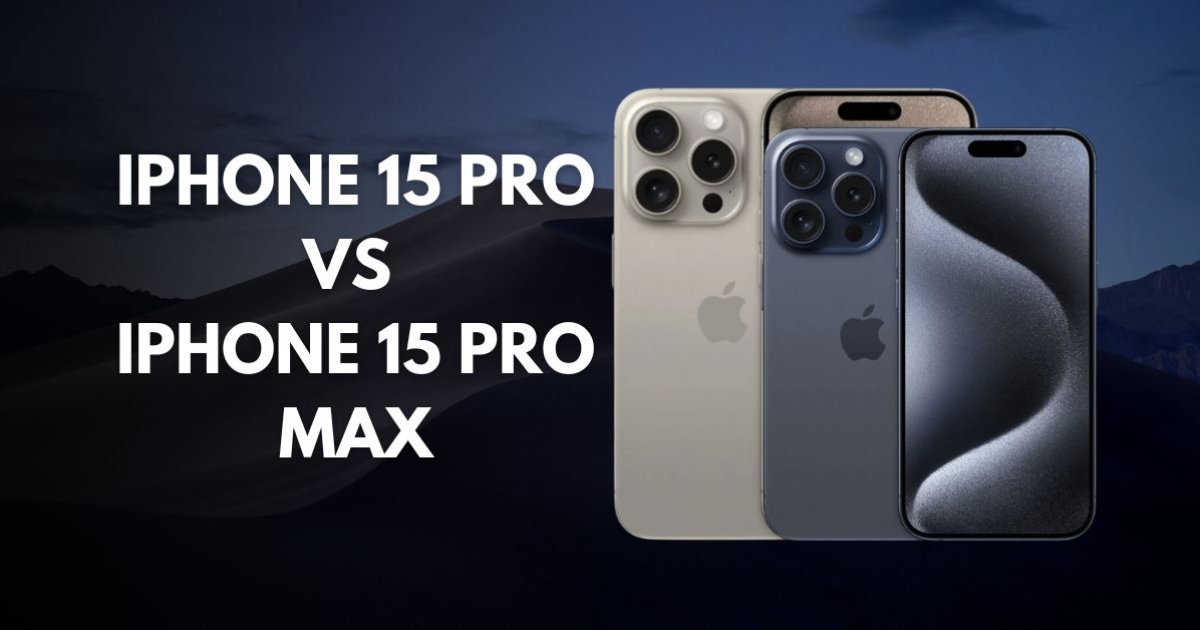
In the refurbished market, a 16 Pro is now close in price to a new 16. The Pro gives you the Titanium build and the 5x Telephoto zoom. If you can find a 16 Pro for under $800, it is a significant upgrade over the base 16. Compare side-by-side.
7. A Brief Tangential Thought on Colors
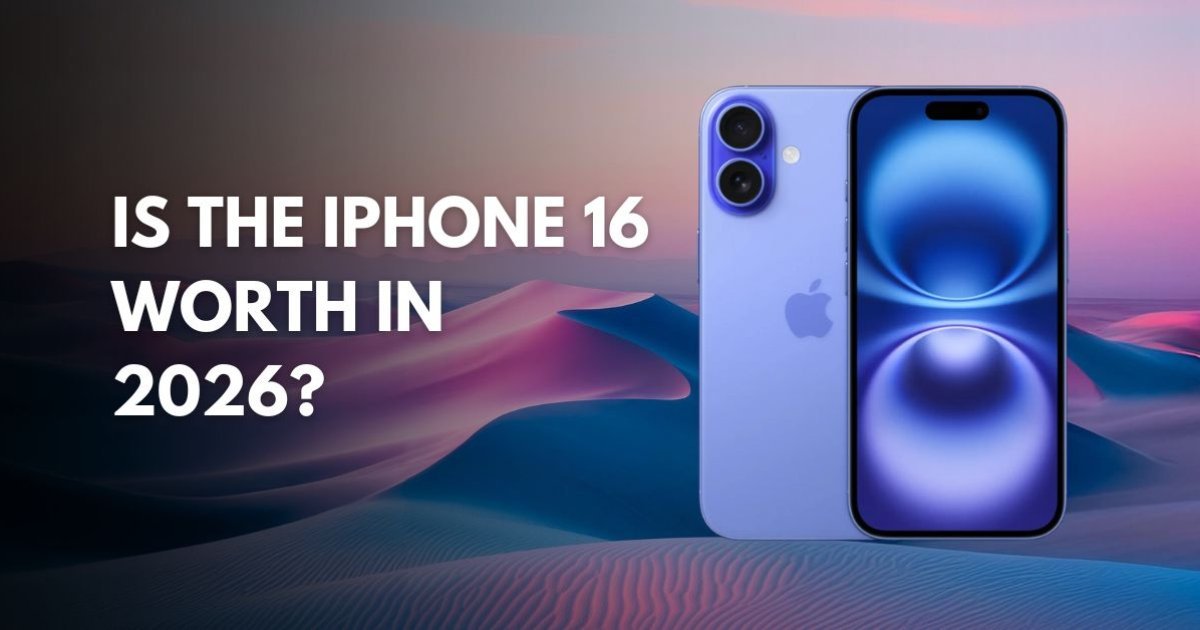
Can we give Apple credit for the iPhone 16 colors? The Ultramarine and Pink were bold and saturated, a massive departure from the "pale, dusty" colors of the iPhone 15. In a world of gray and black titanium, a vibrant iPhone 16 still turns heads in 2026. (Rhetorical question: Why did it take Apple so long to give us a blue that is actually blue?)
The Verdict: Is it Worth it?
YES, it’s worth it if:
- You are upgrading from an iPhone 12 or 13. The jump in speed, camera quality, and battery life will feel like moving from a flip-phone to a spaceship.
- You want Apple Intelligence but don't want to spend $1,000+.
- You prefer a lightweight phone (the aluminum 16 is much easier on the wrist than the Titanium Pro models).
NO, it’s not worth it if:
- You are coming from an iPhone 14 Pro or 15 Pro. You will miss the 120Hz screen and the telephoto zoom every single day.
- You are a "Screen Snob." The 60Hz display is the Achilles' heel of this device in 2026.
You can afford the iPhone 17. The upgrades to the display and front camera on the 17 make it a much more complete smartphone.